
We’re living in a world built around convenience; most things nowadays are built around being quick, readily available, and easy to access. Need entertaining? Browse the dozens of streaming platforms at your fingertips. Peckish? Scroll through Deliveroo and food will be with you in just a moment. Need a date to share your films and food with? Swipe right. Welcome to 2025.
In amongst having convenience as an option, I hope we never forget the power of cooking, dining, and eating where love’s concerned. Whether romantic or platonic, food has the power to express what words cannot and, in various forms, acts as a love language…
Giving them a seat at the table
Being authentically and comfortably yourself
Eating together is an intimate act. And it’s intimate for a number of reasons. To start, everyone needs food. If you strip it back to its bare bones, food is a necessity for survival, and it’s a shared necessity. It’s a mutual ground and something that we all have in common.
When you start to add layers to this and consider food as a source of enjoyment and cooking as an act of love, you unlock several angles as to why eating together is intimate. When eating, you’re often at your most relaxed and it can be time to connect with whoever you’re dining with. If you’re cooking or have been cooked for, that’s an act of care and love.
As someone that loves food, it makes me sad to think that people feel shy to eat certain things infront of others, especially in a romantic context. It makes me even sadder to know that this feeling is familiar to me based on a previous experience. Except I didn’t just feel shy, I felt crippled with anxiety every single time.
Not even my favourite things (cooking, eating, and dining out) were enough to bring me joy in this scenario and overpower the crippling anxiety in my stomach (something that I convinced myself were just butterflies at the time). Looking back, it was probably my nervous system telling me to get out, because I wasn’t truly happy. And to get my attention good and proper, it would attempt to stage an intervention in scenarios where eating was involved (and therefore intimacy as a by-product). There’s nothing quite like the diet a la toxic relationship.
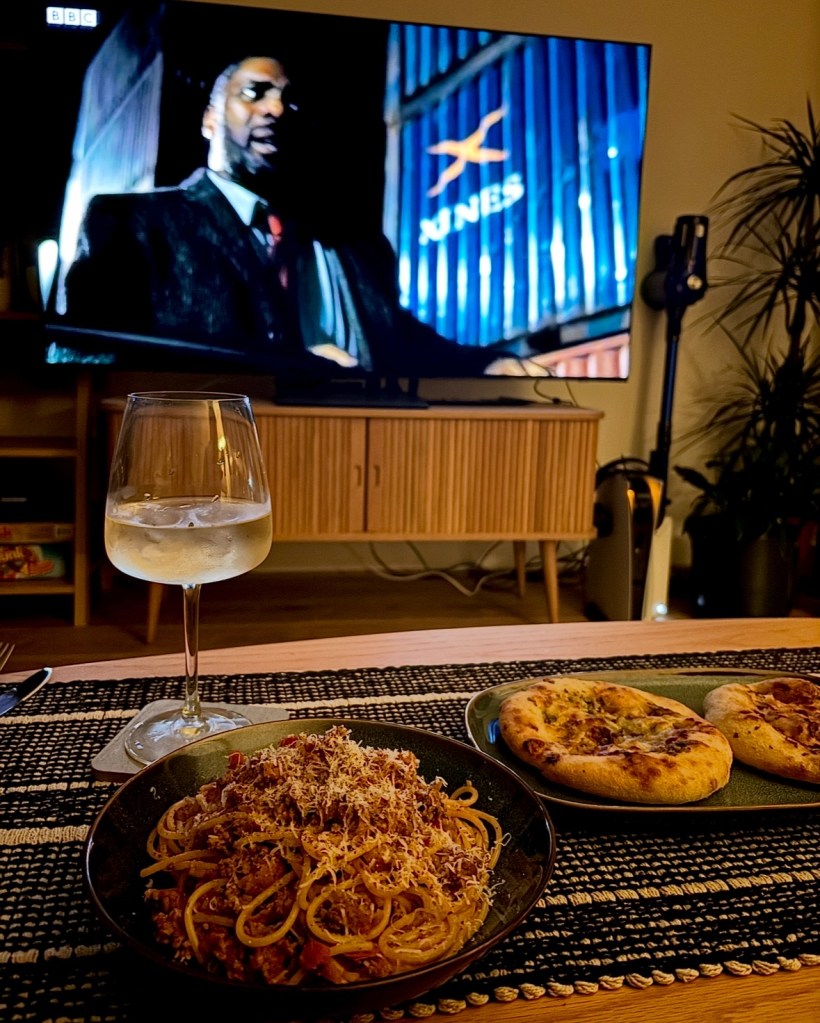
Now I’m lucky enough to know what it should feel like to be unapologetically yourself, to eat whatever you want, and to not give a f*ck whilst you do it opposite or next to the one that you love. And it’s even better when you’ve got someone to do it all with – the midweek homecooked meal. The takeaway on a Friday night. The more upmarket anniversary meal where the waiters pour the wine for you. The mandatory 2am kebab as you both stand synchronously swaying at boss man’s greasy counter.
Showing someone your favourite places
You tell only your nearest and dearest the most sacred things. And it’s one thing to say it, but it’s something else to show it. The same goes with letting someone in on your favourite places to dine. Again, it’s one thing to recommend this place to someone, but it’s another level to hold their hand and lead them there.
Usually, favourite places aren’t quickly determined. Whether you realise it or not, they’re earned through time and connection. There’s a reason why these places are your favourite – you’ll likely feel yourself there, and the food and service are something to write home about. You may even have memories connected to the place, or enjoy a sense of familiarity. It might be somewhere that is symbolic of your culture, heritage, or identity.
You don’t share these places with any old person – chances are, they’ll mean something to you. Taking them to one of your favourite places is a subtle way to say ‘this place matters to me, and now I want to share it with you.’
Let’s also not forget the pressure of making a recommendation or offering to take someone somewhere – it comes with the anxiety of ‘is it going to be as good as last time?’ and ‘oh my god I really hope they like it as much as me’. If you’re willing to sit with that anxiety for someone, or they’re willing to do it for you, then that’s pretty indicative there’s a lot of love between you, romantic or platonic.
A labour of, and for, love
Cooking for others
It can take a lot to open up your heart to someone – a dash of courage, a generous helping of trust, and lashings of vulnerability.
The same goes for opening up your kitchen to someone that you care about.
Cooking has always been my way of showing that I care about someone – giving them a full belly leaves my heart just as full.
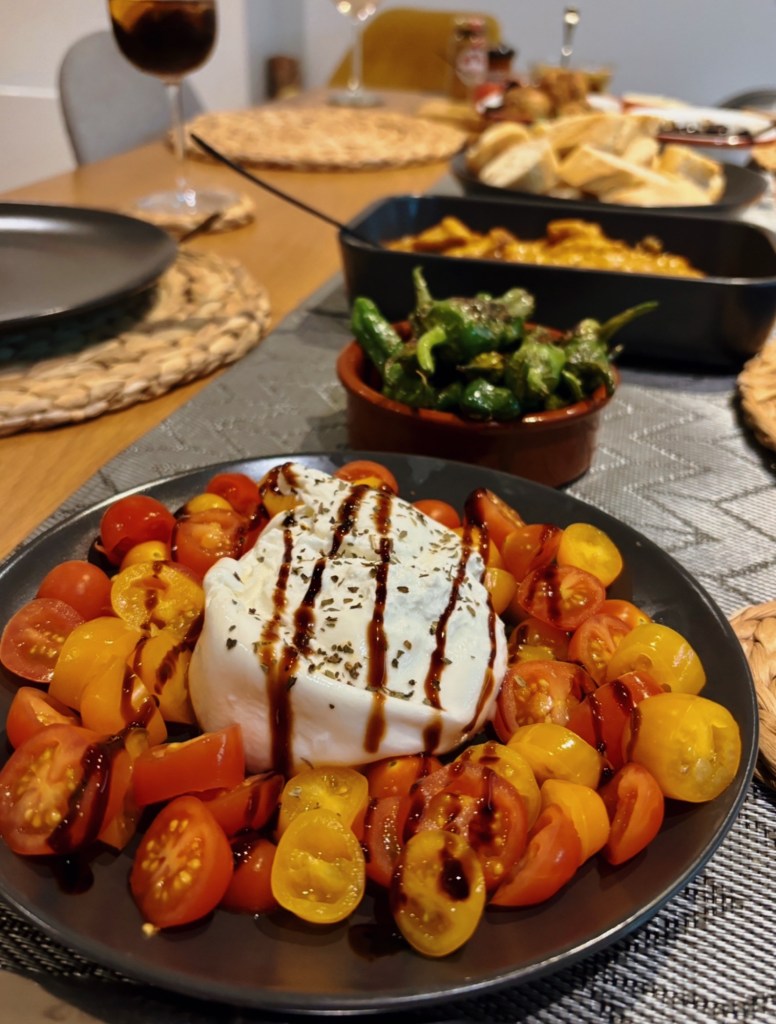
My old apartment used to be the best space for hosting, and I absolutely loved it. From deciding what to make after careful consideration over the best crowd pleaser, to going out and buying ingredients to cook, delicately tending to the dish over hours, serving and sharing that experience, and making sure wine glasses are always full. The end-to-end experience was my way of showing my invitees that I was happy to have them over, cook for them, and spend this time and effort on them.
For the friends that stayed the night, breakfast was always at least offered the next morning (albeit not always served, depending on the severity of the hangover). But the fridge was always full should anybody need feeding.
I do come from a family of feeders. And whilst it’s probably biologically impossible to inherit a ‘feeder’ gene, it’s most definitely a trait that I have picked up through observation and environmental learning. I’ve spoken before about how I was lucky enough to have my great-grandma in my life for nearly 18 years, and whilst she was fit and healthy, she’d always make sure we left after our visit with a fully belly. Infact, if you ever said we didn’t want anything to eat, you’d be too scared of offending her, and so in preparation for visiting it was always best to go on an empty stomach.
All her life, she didn’t have much in terms of money, but she did have a feeder mentality by the bucketload and she’d make sure everyone around her never went without. It’s a trait that’s definitely made its way down the family tree to grandparents, my dad, and certainly me.
Being cooked for
We’ve all been in those relationships where you give pretty much everything, and get very little in return. I’m sure this is true also for family and friendship dynamics as much as it is for romantic encounters…until you find the one.
Until that happens though, being the sole cook isn’t always a great place to be. Now it might not bother some people, especially if the non-cook co-operates with purchasing ingredients, providing meal ideas, or even prepping some of the ingredients. Or it may not bother you at all if they pull their weight in other areas around the house, or if you’ve mutually agreed that cooking is your remit to own.
But for those of us that have a love for food, see cooking as a love language, or look for deeper meaning in the simplest of things (sometimes unnecessarily and to our own detriment, I’m sure), it can be a pretty big deal. Especially if the lack of being cooked for acts as a metaphor for the rest of your relationship where you feel like you’re constantly aiming to please, consistently go above and beyond, and you’re met with not even the bare minimum in return. Most of us have been there.
It’s a gorgeous feeling when you find someone that matches your effort though, especially when it comes to cooking.

Effort doesn’t even have to correlate to the time spent cooking either – infact, who doesn’t love a quick one pot dinner to reduce washing up and cooking times? It’s more time to converse, slob around, or aimlessly browse holidays online that you can’t afford. Whatever floats your boat.
It’s more the consideration that goes into it – the remembering of your favourite dishes, preferences you have, anything you’ve mentioned in passing that’s been put into practice. For those that don’t always know what to say, it’s a gesture that speaks volumes without words. Whether it’s a homecooked meal to say sorry, get well soon, or even just ‘I care about you’, it can go a long way.
There doesn’t even need to be a reason to cook, no special occasion. Being cooked for is a welcomed reminder that you’re cared for, loved, and worth the time/effort.
Final thoughts…
Of course, convenience has its place and it always will. But when it comes to thinking about eating, cooking, and dining as a form of intimacy – and a love language – I hope we don’t lose sight of the enjoyment that comes with that, in place of processes that save time and energy.
For it’s the time and energy that goes into cooking, dining, and eating with a loved one (whether romantically or platonically) that makes it a love language.
 Dinner With Meg
Leave a comment